We have developed more than 300 professional, customer converting, mobile friendly websites.
Subduction and exhumation rates of ultrahigh-pressure rocks exposed in the Śnieżnik Massif
Principal Investigator: mgr Małgorzata Nowak Scientific Supervisor: dr hab. Jacek Szczepański
Przykładowy nagłówek
Description of the problem to be solved
About Us
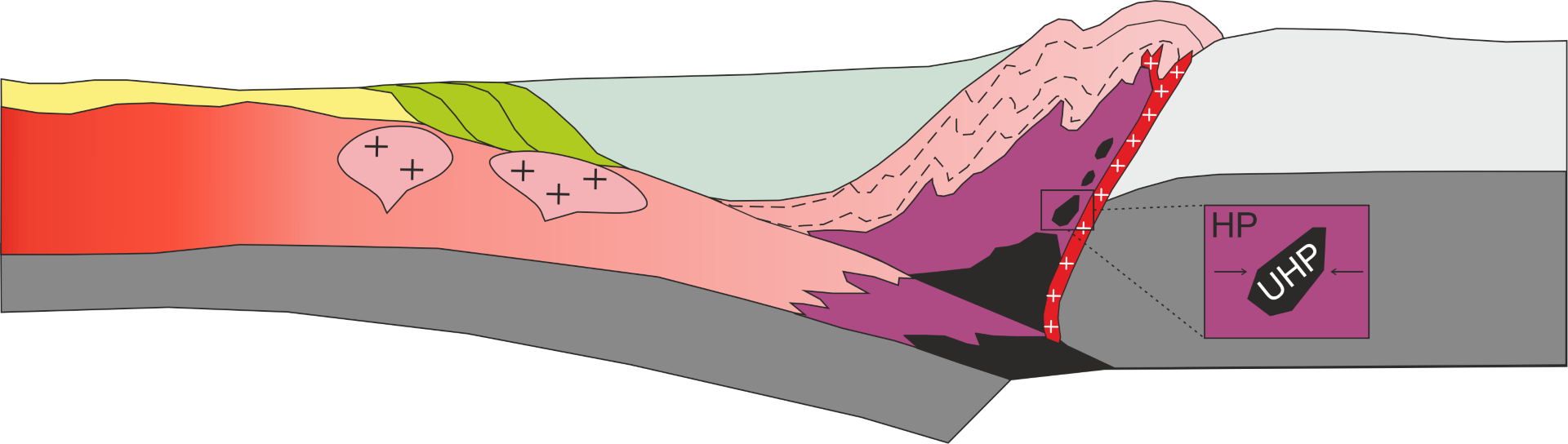
The rocks found on the Earth's surface were formed as a result of diverse processes. On this basis, we divide them into magmatic, sedimentary and metamorphic. Metamorphic rocks include those that have been buried in the Earth's interior, e.g. as a result of continental collision. In the Earth's interior, pressure and temperature increase with increasing depth. Under such changed conditions, the minerals in rocks undergo recrystallization, i.e. new metamorphic minerals are formed from the original mineral assemblage. Based on the observed parageneses, using the principles of equilibrium thermodynamics, it is possible to reconstruct the pressure and temperature conditions under which a given rock was metamorphosed. Of particular interest are ultra-high-pressure (UHP) rocks. These are rocks containing inclusions of ultra-high-pressure minerals such as coesite or diamond, which are stable at extremely high pressures (>2.8 GPa at about 800°C). Assuming homogeneous pressure increase with depth (lithostatic pressure model), such conditions are present at a depth of around 100 km below the Earth's surface. This means that the rocks we are currently observing on the surface, that contain inclusions of UHP minerals, were once buried to such great depths and then, as a result of various geological processes, they were exhumed to the Earth's surface. The UHP rocks occur in Poland in one geological unit. These are the eclogites exposed in several locations in the Śnieżnik Massif.
The goal of this project is to accurately decipher the conditions of metamorphism that are recorded in the UHP rocks of the Śnieżnik Massif and the rocks found in their immediate surroundings. There is a considerable debate in the literature regarding the conditions of metamorphism recorded in the eclogites and the surrounding orthogneisses of the Śnieżnik Massif. The present work aims to investigate these discrepancies. To obtain the best possible results, various methods based on the principles of equilibrium thermodynamics will be used: phase equilibria modelling and conventional geothermobarometry. In addition, using isotopic dating techniques, it will be possible to determine the timeframe of the main stages of metamorphism recorded in these rocks. Based on the combination of all the above-mentioned methods, it will be possible to create a geodynamic model of the evolution of the Śnieżnik Massif. Such a model will represent the individual stages of continental collision, which resulted in burial, metamorphism and exhumation of the studied rocks. Data on the timeframe of metamorphism will furthermore provide important information on the Variscan history of the area.
The results obtained in the scope of this project will broaden our knowledge on the UHP rocks found in the Sudetes. Moreover, they will provide additional information on the timeframes of the UHP metamorphism in general.
Project leader: mgr Małgorzata Nowak Scientific supervisor: dr hab. Jacek Szczepański